
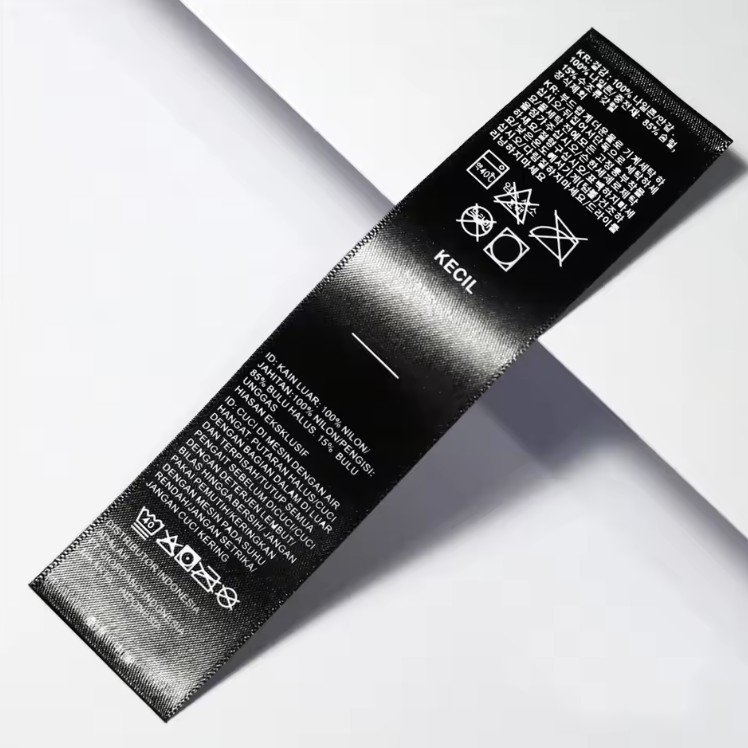


Displayed sample and custom specification
The photograph shows a black elongated label with light printed wording and care symbols. This is a custom-order display example: we confirm material, finished dimensions, fold and sewing position with you for your own project; the photograph does not fix them.
Use the pictured layout to discuss reading direction, text size and language versions. For the production handoff, record the garment/style reference and the exact artwork and physical sample that your team approves.
For garment care labels, keep the approved content, physical sample and bulk-order instructions connected. A clear production handoff and receiving check help your team identify the correct label version before your team sews it into apparel.
Request a Garment Care Label Quote — send the garment/style reference, current specification and quantities, or mark the items that still need review.
Confirm the order against one approved reference
Before releasing an order, record the approved artwork file and revision, label dimensions, selected material and construction, garment/style reference and physical sample reference. Keep the approved garment care wording with that record; the garment composition printed on a label is separate from the material that forms the label.
- Content and layout: identify the final wording, symbols, language, reading orientation and any size or style variants.
- Physical construction: record the material, finished dimensions, fold and attachment details that you and the supplier actually confirmed. Leave an undecided preference open for review rather than treating it as approved.
- Order quantities: list the quantity for each approved artwork or language version and confirm how minimum quantities apply.
- Delivery plan: confirm the destination, packing instructions and required delivery date. Separate the production schedule from shipping and customs time.
Make the handoff to the garment team explicit
Share the same approved file revision and sample reference with the buyer, label supplier and garment team. Identify who approves the care content and who checks the physical label. Ask how the packing and identification plan will distinguish each version so the receiving team can match it to the correct garment style.
When an instruction changes after approval, mark the change and ask which artwork, sample or order details need approval again. Keep the earlier and revised references clearly identified; do not assume an old sample covers a new material, layout or garment care instruction.
Compare the received labels before sewing
Agree the inspection method and acceptance criteria for your order before production. At receipt, use the approved sample and order record as the comparison references.
- Match the package or batch reference, label version and garment/style reference to the order.
- Check that the wording, symbols and language are complete and correspond to the approved artwork.
- Compare dimensions, orientation, material and confirmed fold or attachment details with the approved sample.
- Check the stated quantity and version identification against the agreed packing list, and record any difference.
- If you find a difference, identify the affected version or package, take clear photos and record measurements and quantities. Keep the affected labels separate while you and the supplier review the issue against the approved specification.
This comparison does not replace a required wash or use test. If your project specifies tested performance, request the relevant test evidence and agreed acceptance criteria separately.
Keep a usable reference for the next order
Retain the approved artwork revision, confirmed specification, sample reference, delivery record and any agreed correction. For a reorder, state which parts remain unchanged and list new quantities or changes. Ask whether the changed elements need a new sample before approving production.
See the care label category for the overall range, follow the care label approval workflow, and use the repeat-order reference checklist for your next order.
Questions About Garment Care Label Orders and Delivery Checks
What should the final garment care label order record contain?
Keep the garment/style reference, approved artwork file and revision, confirmed label construction, sample reference, quantities by version, packing identification and delivery destination together. Record who approved the content and physical sample before releasing production.
How should I check a delivery of garment care labels?
Use the agreed inspection method and compare the received labels with the approved sample and order record. Check the wording, symbols, version, dimensions, construction, packing identification and quantities before your team issues the labels for sewing.
What should I do if the labels do not match the approved reference?
Record the affected version, package or batch reference, measured differences, quantity and clear photos. Keep the affected labels separate and ask the supplier to review the issue against the approved specification before using them.
Can a previous delivery photo be used for a repeat order?
A photo can help identify the project, but provide the approved artwork revision, confirmed specification and sample or previous order reference as well. List every change and ask whether the change needs a new sample approval before repeating production.
What MOQ and timing should be confirmed for the order?
The website lists a starting MOQ of 100 pieces, sampling at around 3 days after specification and artwork review, and bulk production at usually 7–15 days after physical sample and specification approval. Confirm the minimum for each version and the production schedule for the final quantity and construction. Shipping and customs time are separate.
Send your garment care label order brief or review the ordering FAQ.
REFERENCE SPECIFICATION · 参考规格
Reference specification for a new sample
These are proposed values for a NEW sample. They are not measurements of the photographs, a recovered order, a signed production sample or a test result.
Existing evidence and its limits
Existing product descriptions and photograph observations remain above. The proposed dimensions, construction and packing below are not additional measured facts about those photographed samples.
Material, print and fold
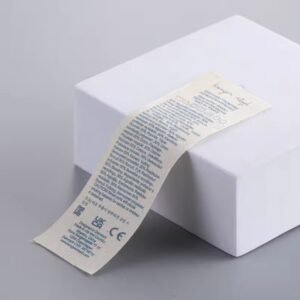
Reference option: cream/off-white single-face polyester satin with black resin thermal-transfer print and heat-cut edges. Flat 30 × 70 mm, centre-folded to 30 × 35 mm; reserve 5 mm at the open ends for the seam, leaving approximately 30 × 30 mm visible.
Layout and supply
For this proposed zero-gap layout only, repeat pitch is 70 mm; keep any registration mark in the seam allowance. Confirm printer/cutter needs before release. Proposed EN then FR only if both languages are required; the garment owner supplies actual composition, care wording and symbols.
Version identification
The existing black-label photograph remains an appearance reference. This cream reference is a separate proposed option. Keep the exact garment/style, artwork revision and approved wording with each new label version.
Review the category reference option · Download the reference specification (TXT) · Size allocation and packing example
Record the final drawing, artwork revision, component quantities, actual physical sample and approval before bulk production. Garment composition/care content, performance results and approver/date must come from the actual project.
Planning a Canadian-destination order? Use the Canadian specification review and physical-sample approval checklist, then include buyer-approved fibre/care content, applicable language versions and fold/seam dimensions in your care-label quote request. Identify Canada as the destination and keep the approved content, drawing and sample revision together.
Reviews
There are no reviews yet.