
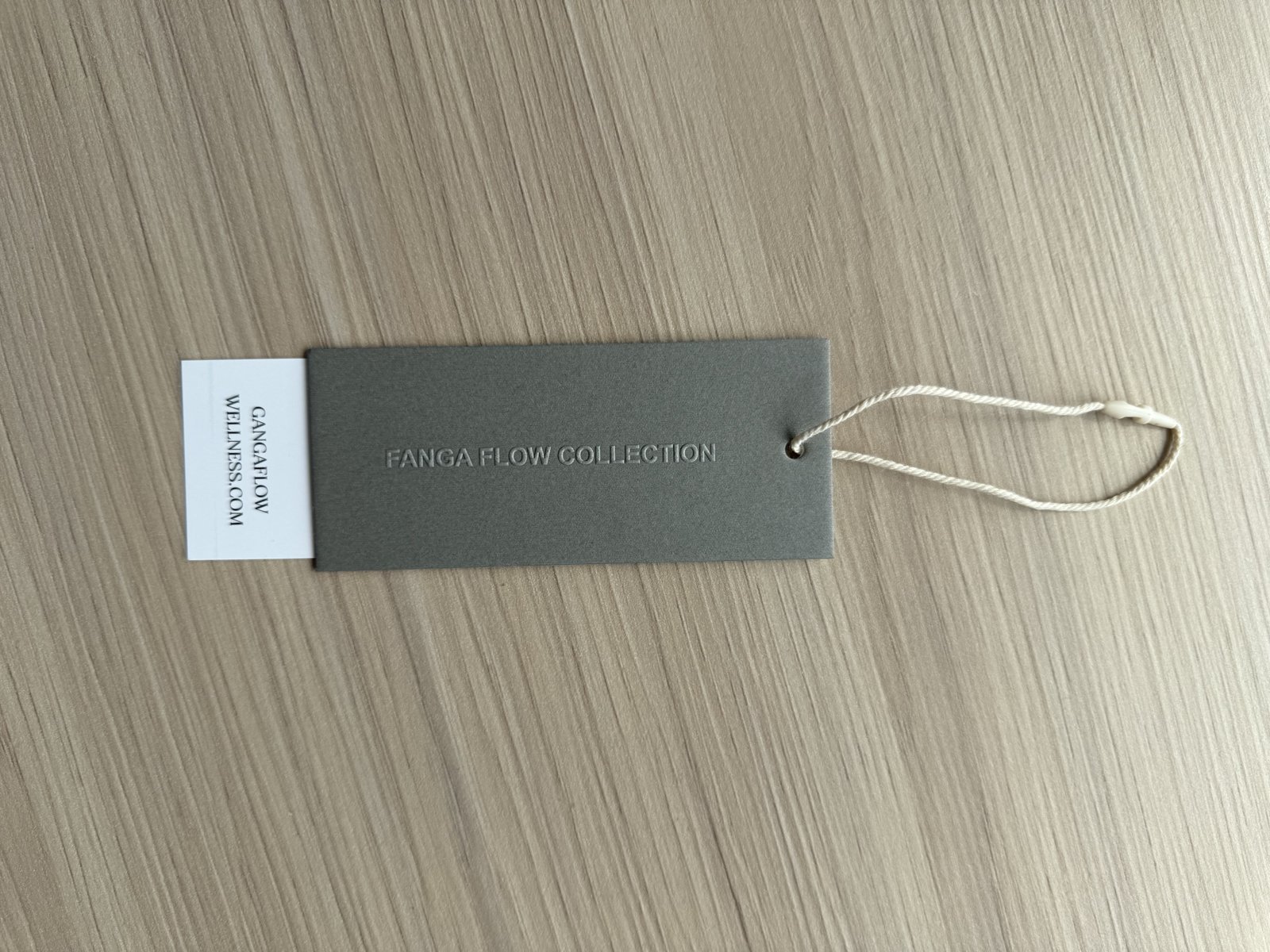
Embossed hang tags have a raised design; debossed hang tags have a recessed design. Before comparing prices, mark the intended relief direction on each tag face and ask how the proposed construction will affect the reverse. A drawing that says only “embossed logo” leaves the stock, opposite face and relationship to printing unresolved.
This guide provides a two-face relief approval record for custom clothing hang tags. Use the general printing brief for the full order specification and the foil handoff guide when a metallic finish is also requested.
Describe the relief from the face the buyer will see
Call the main display face A and the other face B. Mark the top edge, finished outline and hole position. On the relief map, write “raised on face A” or “recessed on face A” beside the actual feature. This is clearer than sending an unlabelled black logo and expecting its depth direction to be obvious.
The printer 4OVER4 explains the raised and recessed distinction and the need to consider reverse impressions. Its stock sizes, tooling and order limits apply to its own products. CanKun must review the proposed tag, material and artwork before confirming the production arrangement.
- Embossed request
- Identify the feature that should stand above the specified display face. Ask the supplier to show the corresponding reverse-face result.
- Debossed request
- Identify the feature that should sit below the specified display face. Ask how the proposed depth and stock affect the appearance of both faces.
- Blind or registered request
- State whether the relief has no ink or foil, or must align with printed or foiled artwork. Approve that alignment separately from the relief direction.
Map the opposite face before approving the construction
Place the front and back artwork on the same controlled drawing. Mark the area behind the relief and identify any price text, care information, barcode or other critical content there. Ask the supplier whether the proposed process could leave an impression or disturb that area, rather than assuming that the back will remain flat.
If a flat information face is important, record it as a requirement for review. The supplier may need to discuss the stock, artwork location or a different construction. Do not assume that adding a second card, a backing layer or another finish is included in the original quote. Agree the revised component count and sample scope first.
Compare actual samples with an explicit relief decision
Give every comparison sample an ID and retain its proposed stock and construction. Review the intended face, the opposite face and the edges around the relief. Note which openings or fine details remain distinguishable and whether nearby printed information is affected. A screen shadow or digital mockup can explain the desired direction, but cannot establish the physical result.
Where relief must meet ink or foil, compare the same named boundaries on the sample. Where the tag contains a barcode, keep its data and scan review in the barcode approval record. A pleasing relief effect does not approve barcode performance. Agree any dimensional or appearance criteria for the actual job; this guide does not prescribe a universal relief depth or registration tolerance.
Separate quote scope from the approved appearance
Ask which faces, relief areas and related operations the quotation includes. Record any setup or tooling line separately from production, and identify whether a later artwork change requires a revised sample or quotation. Keep the approved physical reference with the drawing instead of replacing it with a file named “final”.
Copy this embossed or debossed hang tag brief
- Tag component, faces A/B, top edge, finished size and quantities by version:
- Raised or recessed feature on the named display face:
- Blind, printed or foil-aligned effect and corresponding file revisions:
- Stock reference and critical information on the opposite face:
- Supplier’s proposed construction, sample IDs and face-by-face observations:
- Quotation inclusions, open requirements and physical approval reference:
Compare custom clothing hang tags, complete the hang-tag specification worksheet and request a relief and reverse-face review.
CanKun Packaging accepts custom projects with MOQ starting at 100 pieces; final quantities, versions and combinations are confirmed for the project. Samples are free, with shipping and special requirements confirmed separately. Sampling is usually about 3 days after artwork and specification review. Bulk production is usually 7–15 days after physical sample and specification approval; shipping is separate. Wu Jess responds within 24 hours.