
When sourcing woven labels for knitwear, approve the attachment on a representative knitted panel or garment, not only on a flat artwork proof. The purchasing decision is whether the proposed label and sewing arrangement work together at the actual location when the garment is handled and used as intended.
This guide creates an attachment comparison record for the buyer, label supplier and garment maker. It does not prescribe a universal stitch, machine setting or stretch limit. Keep the label dimensions and fold in the woven label specification guide, and ask the garment maker to confirm the sewing method.
Send the garment construction with the label enquiry
Identify the product, attachment location and intended presentation. A neck label on a knitted sweater, a side-seam label and an external decorative label can place different demands on the attachment. Provide an application photograph or sketch showing what should remain visible and which part of the garment the label will span.
Give the sewing team a representative fabric or finished garment reference. Record its own identity and revision, including any relevant finishing or washing state. Do not assume that a swatch from a different knit, thickness or location represents the intended garment. Where the exact fabric is not available, mark the comparison as provisional.
Compare attachment proposals while keeping the label identifiable
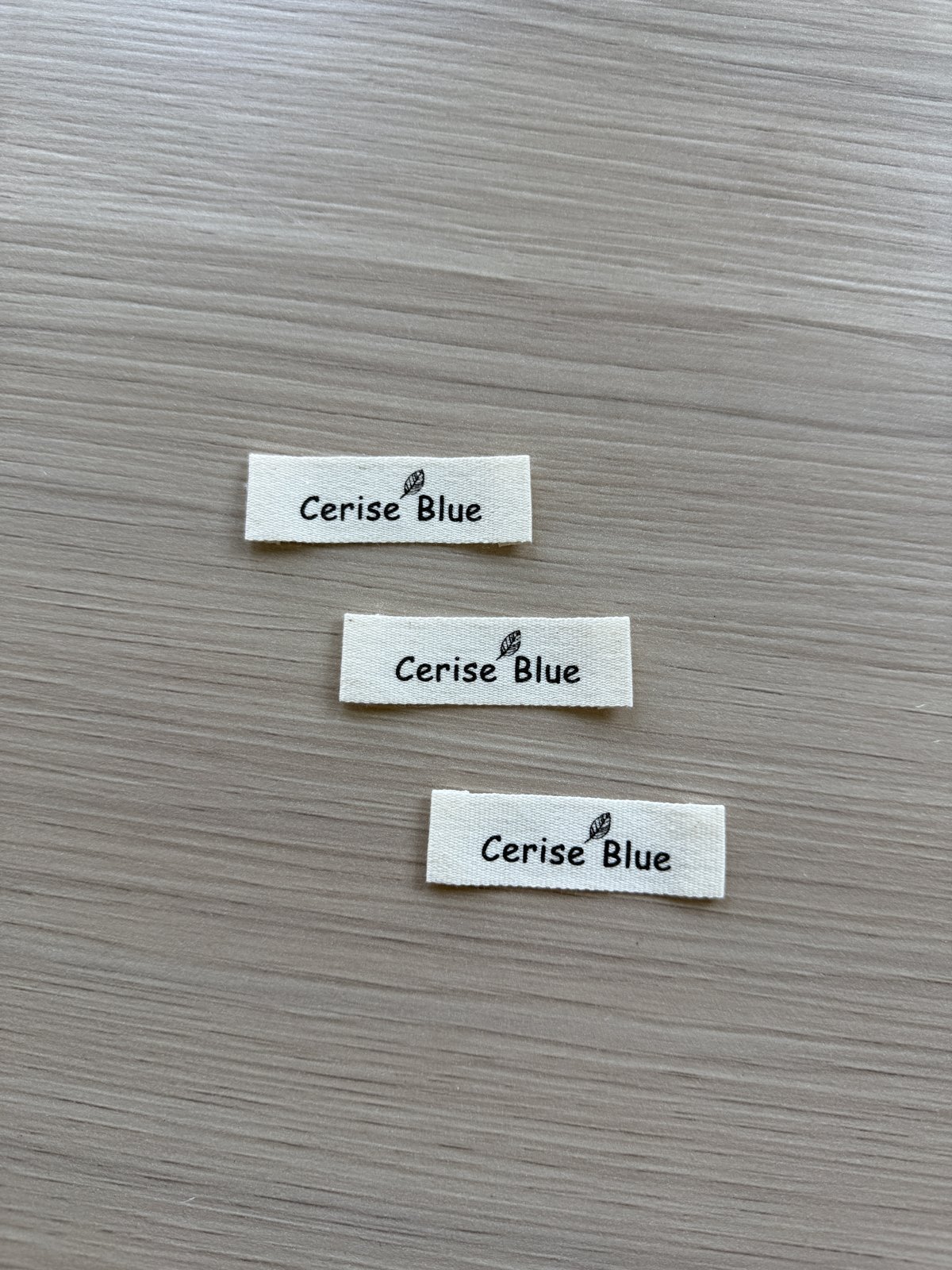
Start with one identified woven label specification: artwork, actual dimensions, fold and edge treatment. Ask the garment maker to propose the attachment layout and record the sewing area on a drawing. If a different label construction is suggested, identify that change too; otherwise a better-looking trial may hide which variable produced the difference.
- Garment reference
- Style or panel ID, knitting construction, preparation state and attachment location.
- Label reference
- Sample ID, artwork revision, flat and visible dimensions, fold and proposed material.
- Attachment proposal
- Sewing-team drawing or method reference, attachment zones and any changes between trials.
- Review condition
- How the garment is positioned or handled, who observes the result and which questions remain open.
Review the garment at rest and during intended handling
First inspect the attached sample with the garment resting naturally. Record the visible label position, any local gathering or unevenness, and whether the intended text remains exposed. Then have the garment team demonstrate the normal handling relevant to that location. Note whether the label or its attachment appears to restrict the fabric, lift, rotate or change the garment’s appearance.
Describe observations rather than giving an unsupported pass mark. For example, “visible gathering beside the lower attachment in trial B” is more useful than “the label is unsuitable”. Keep photographs of comparable positions and identify the trial. Do not stretch a sample arbitrarily and present that as a standardized performance test.
Keep appearance approval separate from performance evidence
A placed sample can help the teams select a presentation and attachment arrangement. It does not by itself prove wash resistance, dimensional stability or wearer comfort over time. If these are purchasing requirements, agree the applicable product, method, conditions and acceptance criteria with the responsible teams and retain the corresponding evidence.
Use the edge-by-edge review for exposed corners and finishing. Use the real logo sample case for small-text appearance. Those checks complement the garment attachment trial; they do not replace it.
Release the label and attachment as a matched reference
Keep the approved garment reference, label sample and attachment drawing together. If the knit, label size, fold or sewing arrangement changes, identify the change and ask which part of the trial needs repeating. Approval of one sweater construction should not automatically release the same label arrangement for every garment in a collection.
Copy this knitwear label attachment request
- Garment or panel reference, preparation state and intended location:
- Label artwork, material proposal, sample ID, dimensions and fold:
- Garment maker’s attachment drawing and comparison proposals:
- At-rest and intended-handling observations with identified photographs:
- Separate performance requirements, evidence status and open questions:
- Selected matched references, release owner and quantity per version:
Browse custom woven labels, use the woven-label worksheet and send your knitwear label and application brief. Ask which construction can be supplied for the intended sample review.
CanKun Packaging accepts custom projects with MOQ starting at 100 pieces, subject to the specification, versions and agreed quantity plan. Samples are free; shipping and special requirements are confirmed separately. Sampling is usually about 3 days after artwork and specification review. Bulk production is usually 7–15 days after physical sample and specification approval, with shipping separate. Wu Jess responds within 24 hours.