
To compare nylon vs satin care labels, first identify the proposed substrate rather than treating the names as complete specifications. Nylon describes a fibre family; satin describes a fabric construction. Ask for the actual label material, its printable face or faces and the proposed printing route before choosing a sample.
The useful buying decision is which identified substrate-and-print combination suits the approved layout, attachment and required evidence. This guide provides a material comparison card. Use the care label production guide for the wording and version release, which remains a separate approval.
Put fibre identity and surface description in different fields
A quotation saying only “satin” may leave the fibre content unspecified. A quotation saying “nylon” may still leave the construction, surface treatment and printable sides unresolved. Ask the supplier to complete each field for the actual offered material and to identify the physical sample or supplier reference used.
Garment-accessory supplier Ningbo MH distinguishes nylon fibre from satin construction. That distinction helps organise the enquiry; its general fabric comparisons are not test results for a CanKun care label. Do not select a label from a broad claim that one material is always softer, stronger or more washable.
- Fibre or material composition
- Record the supplier-confirmed composition of the label substrate. Keep this separate from the garment fibre statement printed on it.
- Construction and surface
- Record the offered construction or trade reference, visible finish and any printing treatment the supplier identifies.
- Printable faces
- Confirm one-side or two-side printing on the actual substrate and identify the presentation face in the layout.
- Print route
- Record the proposed batch-print or thermal-transfer combination and the physical sample that represents it.
Compare both options using the same approved layout
Use the same text, symbols, dimensions and language revision for the comparison where feasible. Examine the smallest required information at actual size, including the reverse if it carries content. If a material requires a different layout or print arrangement, record that difference explicitly instead of comparing unrelated samples.
Give the options neutral IDs such as substrate A and substrate B. Keep their supplier references with the sample cards, so the selected appearance can be traced to the offered material. The comparison should show which option and print combination the buyer approved, rather than a general preference for the word “satin”.
Ask how the substrate and print system are matched
For thermal-transfer printing, identify the offered substrate, ribbon and relevant printing arrangement together. Material manufacturer ARMOR-IIMAK lists printable-face options and ribbon compatibility for its own textile materials. This illustrates why a material name alone is insufficient; it does not establish that CanKun uses that manufacturer’s products or holds its certifications.
For a supplier-printed order, ask which proposed route the sample represents and which operations are included in the finished label. For blank rolls printed by the buyer, use the blank-roll and ribbon trial brief to plan the actual printing trial. Do not transfer settings from a different material or machine without review.
Approve handling and required resistance separately
Review the selected sample at the intended garment location, including its fold, edges and access to the information. Record the buyer’s actual observations of handling and appearance. A smooth-looking photograph does not establish wearer comfort, and approval of print clarity does not establish resistance to washing or another treatment.
Where resistance is required, state the intended product and conditions, and ask for evidence tied to the proposed material and print combination. Keep the sample, method and result identifiable. Use the wash-testing evidence checklist; do not turn a generic material description into a numerical wash guarantee.
Copy this care label material comparison card
- Application, approved wording/layout revision, size and printable faces:
- Option A and B substrate references, confirmed composition and surface description:
- Proposed print route and corresponding printed sample IDs:
- Actual-size text, reverse-face and installed handling observations:
- Required resistance evidence and any unverified claims:
- Chosen substrate-and-print reference, remaining approvals and quantities by version:
Explore custom care and wash labels, prepare the care-label worksheet and request an identified material comparison.
CanKun Packaging accepts custom projects with MOQ starting at 100 pieces; final specifications, versions and quantities are confirmed for the project. Samples are free, with shipping and special requirements confirmed separately. Sampling is usually about 3 days after artwork and specification review. Bulk production is usually 7–15 days after physical sample and specification approval; shipping is separate. Wu Jess responds within 24 hours.
REFERENCE SPECIFICATION · 参考规格
Reference specification for a new sample
These are proposed values for a NEW sample. They are not measurements of the photographs, a recovered order, a signed production sample or a test result.
Existing evidence and its limits
This is a buying comparison guide. It does not add a measured CanKun sample result, test, approval or new customer outcome.
Material, print and fold
Reference option: cream/off-white single-face polyester satin with black resin thermal-transfer print and heat-cut edges. Flat 30 × 70 mm, centre-folded to 30 × 35 mm; reserve 5 mm at the open ends for the seam, leaving approximately 30 × 30 mm visible.
Layout and supply
For this proposed zero-gap layout only, repeat pitch is 70 mm; keep any registration mark in the seam allowance. Confirm printer/cutter needs before release. Proposed EN then FR only if both languages are required; the garment owner supplies actual composition, care wording and symbols.
Photograph / comparison boundary
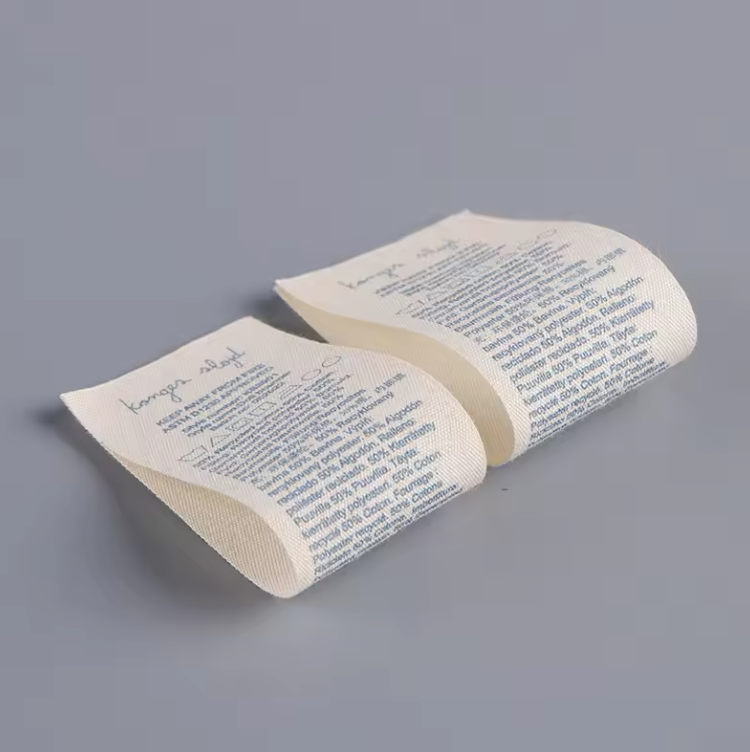
This reference uses black print and a proposed satin substrate. The existing cream photographs show blue print; neither the print colour, satin identity nor these dimensions are being assigned to those samples. Nylon requires its own identified substrate and print trial.
Review the category reference option · Download the reference specification (TXT) · Size allocation and packing example
Record the final drawing, artwork revision, component quantities, actual physical sample and approval before bulk production. Garment composition/care content, performance results and approver/date must come from the actual project.