
A hang-tag brief needs to describe the whole assembled set. These real CanKun-produced paper hang-tag photographs show two approaches to the relationship between the front card, information area and string attachment.
Planning your order? Explore custom printed hang tags, or request a layered hang tag quotation. Describe each card, its artwork revision, hole and string arrangement, supply format and quantities per assembled set. Use the published photographs to explain the intended arrangement; confirm your own dimensions and stock.
The two assembled samples
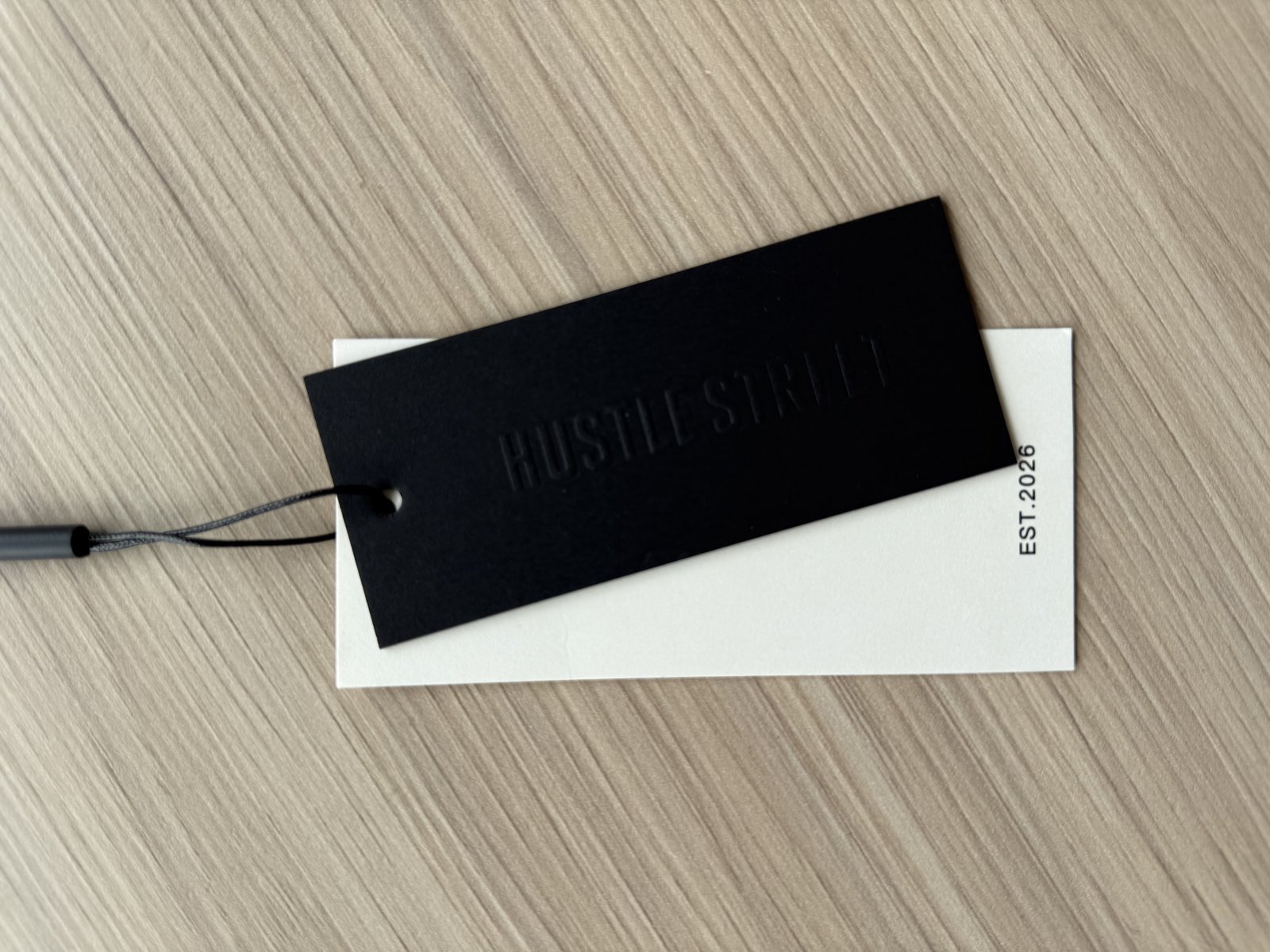
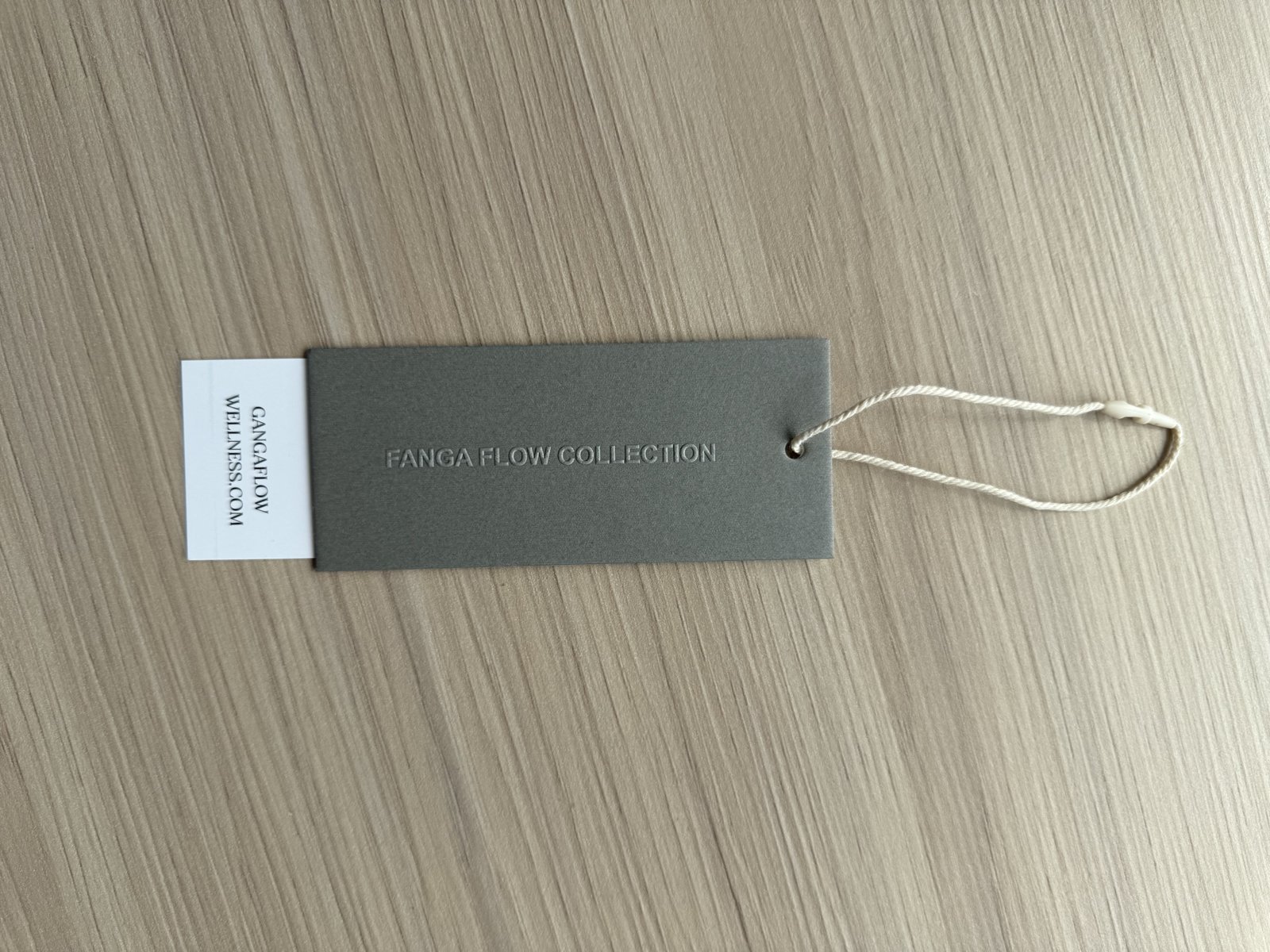
Sample A has a dark rectangular front card over a larger white card, with the attachment at the upper corner. The contrast separates the main branding area from the supporting card. Sample B shows a grey front card beside a visible white information area, with a light string passing through the top opening.
Review the set, not just the front artwork
- Layers and order: identify each card separately and specify which surface should face the buyer when the set is attached.
- Information area: check which text remains visible when cards overlap. Review any reverse-side information in the assembled orientation.
- Hole position: agree the location on every component and inspect how the layers align around the attachment.
- String and fastener: specify the requested string colour, length, attachment method and whether assembly is included.
Turn the sample into a clear production brief
Provide front and back artwork for every card, a version name, dimensions, paper specification, finishing requirements and quantities by version. Include an assembly drawing or marked photograph showing the layer order and attachment. Review a physical assembled sample before approving the bulk-production reference.
The visible result is the assembled sample shown in each photograph. Paper weight, coating, exact dimensions, recyclability and strength cannot be established from these photographs alone. This sample case does not report a customer order quantity, approval history or delivery outcome; those records should be confirmed for a specific project.
Plan your own hang-tag assembly
Compare the clothing hang tag range, then use the repeat-order version checklist to keep card and assembly revisions together. Our production photo archive includes printing, paper handling and packing scenes.
Discuss your paper hang-tag sample requirements with the number of cards, artwork, attachment, quantity and destination. CanKun publishes a starting MOQ of 100 pieces and bulk production usually at 7–15 days after physical sample and specification approval. Confirm the final specification and production schedule separately from shipping.
Custom hang tags with a logo and string: prepare a print brief
For custom printed hang tags, identify what belongs on each face before choosing the finish. Supply the logo artwork for the front and the approved retail information for the reverse. In a layered set, assign a reference to every card so the printer can distinguish the branding card from the information card.
Hang tag sizes and shapes
Show the finished width and height, outline and orientation on the drawing. If a reference tag is folded or uses several card layers, provide the size and artwork for each part. Mark the hole position from named edges and confirm the file template before placing text, a barcode or a requested finish near the cut or hole area. The photographed samples illustrate an assembly; they do not define a fixed stock size.
Hang tag printing and string choices
State whether printing is required on one or both sides and distinguish print colours from foil, embossing or another requested finish. Review the paper, print and finish together on a physical sample. For hang tags with string, describe the attachment preference, colour and required hanging position; confirm whether the order should arrive threaded, assembled or packed as separate components.
Quantities for wholesale custom hang tags
List the quantity for each artwork or retail-data version. A total quantity alone can leave the split between sizes, colours or barcodes unresolved. Keep the approved version, packing instructions and assembled sample reference together so a repeat order can be checked against the same set.
Use the hang-tag specification worksheet to record the brief. Browse custom clothing hang tags, then request a hang-tag quote with the artwork and version quantities.
Build a hole and attachment approval record
The grey sample shows a light string passing through the front card and a white information area visible beneath it. Use that assembled orientation when preparing your own brief. A front-card artwork file alone leaves the layer order, reverse-side direction and attachment instructions unresolved.
Give every card in your proposed set an identifier. Mark the hole location from named edges on the drawing, identify its requested diameter and show which faces should be visible when the string is fitted. Record the string or other attachment preference and whether the components should arrive assembled. The actual hole size, edge distance and finish are agreed for the selected material and reviewed on the physical set.
| Part of the set | Information to supply | Approval check |
|---|---|---|
| Each card | Identifier, finished outline, front and reverse artwork revisions | Layer order, reading direction and which information stays visible |
| Hole or eyelet | Requested diameter and coordinates from labelled edges for each card | Alignment and the way the attachment sits on the assembled set |
| String and fastener | Preferred attachment, colour, length and assembly requirement | The actual fitted reference at the intended product position |
| Retail versions | Approved SKU/barcode file, quantity and packing for each version | Variable information and bundle identification against the approved record |
Keep artwork preparation separate from approval
Use the project drawing to distinguish the cut line, safe content area and any requested finish area. Confirm bleed and other file-preparation requirements against the agreed template before production. A foil or embossing request needs its own marked artwork area and physical review; the sample photographs do not establish a standard tooling limit or guarantee scanning performance.
If a new card size, string, hole or retail version is introduced, update its reference rather than describing the set only as “same as before”. Review the assembled sample and intended packing together, then keep the approved record for repeat orders.
Download the editable hang-tag specification worksheet (.txt) and complete one record per assembled set. Copy it into your quote request, with separate quantities for each design and destination. The file itself does not submit an enquiry.
Sample reference and evidence
The original grey-sample photograph has a file-metadata date of 29 September 2025. The visible reference is a grey front card, a white information area and a light loop string. The date belongs to the photograph, not a customer order or delivery. Exact paper weight, thickness, dimensions, attachment strength and recyclability need separate specification or test records.
REFERENCE SPECIFICATION · 参考规格
Reference specification for a new sample
These are proposed values for a NEW sample. They are not measurements of the photographs, a recovered order, a signed production sample or a test result.
Existing evidence and its limits
The published photographs establish a black-and-white multi-card assembly and a grey front card with a white information area and light loop string. The grey photograph’s metadata date is 29 September 2025; it is a photograph date, not a customer order or delivery date.
Two-card reference option
Proposed two separate cards: 50 × 70 mm and 50 × 90 mm, each single-layer 300 g/m² textured white paper. This option is not a single laminated 600 g/m² card and is not a measured reconstruction of the displayed sample.
Print and attachment
Proposed pink spot-colour background with white knockout lettering, blind-embossed logo, no film/varnish; polyester velvet ribbon 3 × 250 mm. Proposed horizontal slot 8 × 2 mm, upper edge 5 mm from top. Review card order, reverse face, threading and knot on the sample.
Review the category reference option · Download the two-card option (TXT) · Size allocation and packing example
Record the final drawing, artwork revision, component quantities, actual physical sample and approval before bulk production. Garment composition/care content, performance results and approver/date must come from the actual project.
Planning a Canadian-destination order? Use the Canadian specification review and physical-sample approval checklist, then include finished card dimensions, front/back artwork revision and attachment details in your hang-tag quote request. Identify Canada as the destination and keep the approved content, drawing and sample revision together.